
This article is provided for educational and informational purposes only. It does not constitute legal, financial, or tax advice, and no attorney-client relationship is formed by reading it. Laws, regulations, official guidance, and related information vary by jurisdiction, change frequently, and may have changed or become outdated since the publication date. Always verify current information with authoritative sources and consult a qualified professional about your specific circumstances. The author and publisher assume no liability for actions taken based on this information.
- Federal appellate authority comes from specific law
- Final district-court decisions are the usual route
- Section 1292 identifies limited interlocutory routes
- Appellate review is not a second trial
- Supreme Court appellate jurisdiction has separate statutes
- A practical way to identify the jurisdictional issue
- Sources
Key Facts
- Federal level: Appellate jurisdiction is the legal authority of a reviewing court to hear a challenge to an earlier decision.
- Federal level: Under 28 U.S.C. § 1291, the regional federal courts of appeals have jurisdiction over final decisions of U.S. district courts, except where direct Supreme Court review is available.
- Federal level: Section 1292 identifies specific interlocutory orders that may be appealed before final judgment and provides a certification route for qualifying controlling questions of law.
- Federal level: Article III gives the Supreme Court original jurisdiction in listed categories and appellate jurisdiction in the other listed federal cases, subject to congressional exceptions and regulations.
- Federal level: Under 28 U.S.C. § 1254, Supreme Court review of a federal court-of-appeals case may occur by certiorari or certification.
Appellate jurisdiction answers a threshold question: does this reviewing court have legal authority to hear this challenge? The answer depends on the court that issued the decision, the kind of decision entered, and the statute or constitutional provision authorizing review.
Federal appellate authority comes from specific law
Article III places the federal judicial power in one Supreme Court and in lower federal courts that Congress establishes. It also identifies categories of cases and controversies to which the federal judicial power extends.
The Constitution separately assigns the Supreme Court original jurisdiction in cases affecting ambassadors, other public ministers and consuls, and cases in which a state is a party. In the other listed cases, Article III provides appellate jurisdiction, subject to exceptions and regulations made by Congress.
For lower federal courts, Congress supplies jurisdiction through statutes. A party therefore needs an applicable jurisdictional statute; disagreement with the result by itself does not create appellate jurisdiction.
Final district-court decisions are the usual route
Section 1291 gives the regional courts of appeals jurisdiction over appeals from all final decisions of U.S. district courts, except where direct review may be had in the Supreme Court. The statute addresses the Federal Circuit separately and ties that court’s jurisdiction to other provisions of Title 28.
The word “final” matters because § 1291 does not state a general right to appeal every ruling made while a district-court case is still underway. When a ruling is not final, the party must identify another source of appellate jurisdiction.
Section 1292 identifies limited interlocutory routes
Section 1292(a) authorizes appeals from specified interlocutory orders. Its listed categories include certain orders granting, modifying, refusing, or dissolving injunctions and certain orders involving receiverships.
Section 1292(b) provides a different, discretionary route in a civil action. The district judge must state in writing that an otherwise nonappealable order involves a controlling question of law, that substantial ground for difference of opinion exists, and that an immediate appeal may materially advance the ultimate termination of the litigation.
Even after that written certification, the court of appeals has discretion whether to permit the appeal. The statutory text also says that an application under § 1292(b) does not stay the district-court proceedings unless a district or appellate judge orders a stay.
Appellate review is not a second trial
The federal judiciary explains that courts of appeals review district-court procedures and decisions to determine whether the proceeding was fair and whether the law was applied correctly. The federal appellate court does not retry the case or hear new evidence.
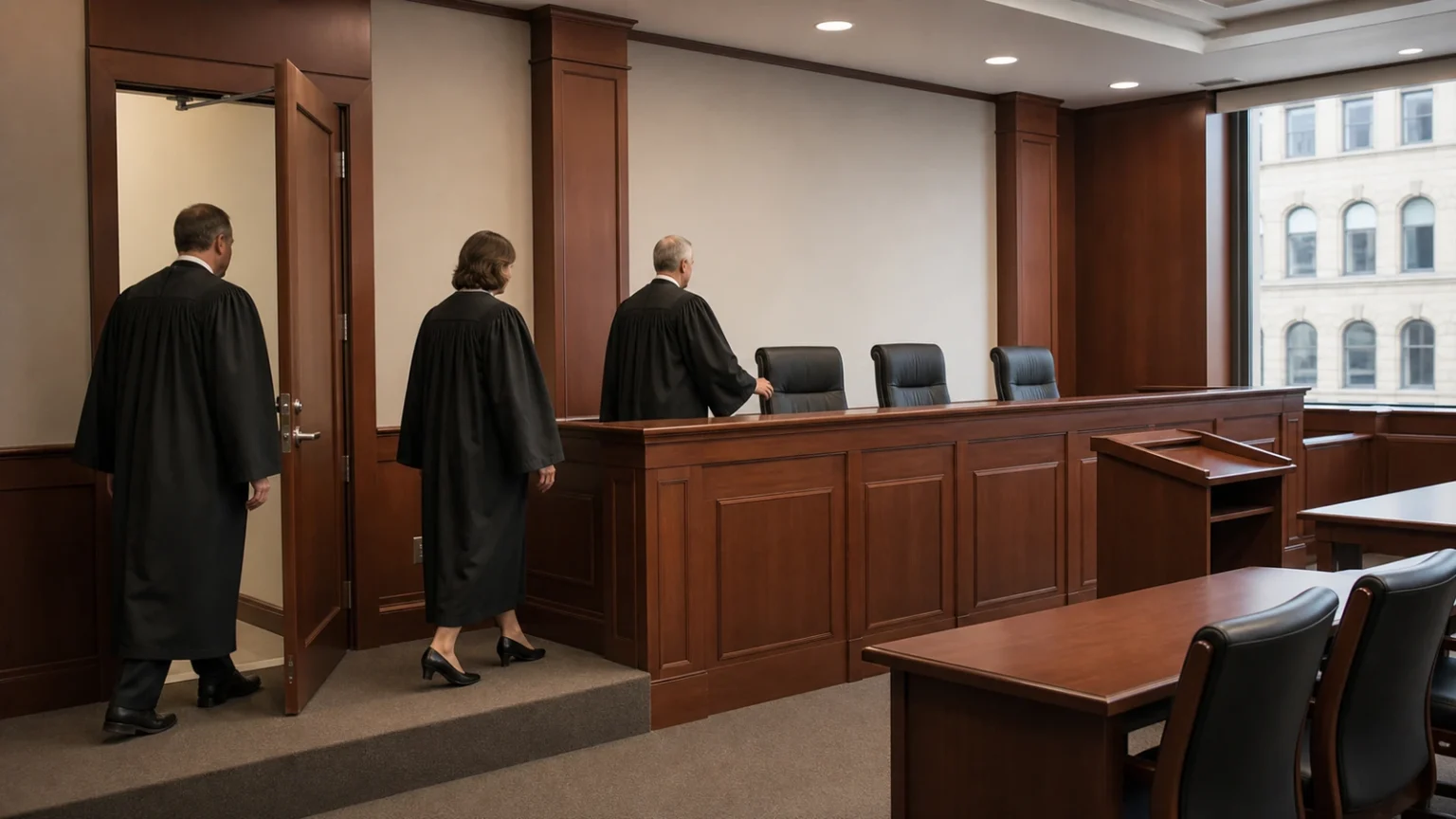
The same federal judiciary guidance states that appeals are usually decided by panels of three judges.
Supreme Court appellate jurisdiction has separate statutes
Section 1254 provides two methods by which cases in the federal courts of appeals may be reviewed by the Supreme Court. One is a writ of certiorari granted on a party’s petition; the other is certification of a question of law by a court of appeals.
A certiorari petition requests Supreme Court review. The federal judiciary explains that the Supreme Court is not required to grant review, so filing a petition does not create an automatic additional appeal.
Section 1257 addresses a different path: qualifying final judgments or decrees from the highest state court in which a decision could be had. Review under that statute is by certiorari and depends on a federal question of the kind specified in the statute.
Section 1257 does not prescribe ordinary state appellate routes. It addresses only Supreme Court review by certiorari of the qualifying final state-court judgments and federal questions specified in the statute.
A practical way to identify the jurisdictional issue
Start by identifying the court that issued the challenged decision and whether the decision is final. For a federal district-court case, compare the decision with § 1291 and, if it is interlocutory, the exact categories and conditions in § 1292.
Then distinguish the authority to hear an appeal from the rules governing how an authorized appeal proceeds. That same distinction helps when reading decisions about juvenile life-without-parole limits: the legal question under review and the court’s authority to review it are separate issues.
Because jurisdictional statutes are precise, broad labels such as “appealable” or “important” are not substitutes for identifying the controlling provision. The useful question is which current authority permits this court to review this decision now.
Sources
- National Archives: Constitution of the United States, Article III
- 28 U.S.C. § 1291 — Final decisions of district courts
- 28 U.S.C. § 1292 — Interlocutory decisions
- 28 U.S.C. § 1254 — Certiorari and certified questions
- 28 U.S.C. § 1257 — State courts; certiorari
- Administrative Office of the U.S. Courts: Courts of Appeals
- Administrative Office of the U.S. Courts: Appeals